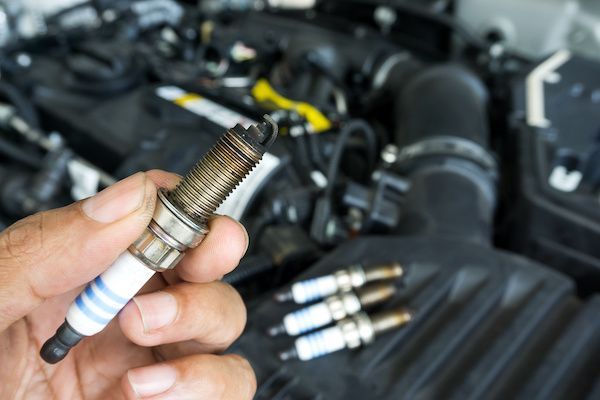
A spark plug is a tiny device that plugs into the cylinder of an engine and delivers the spark for combustion via a conduit that connects the battery to the spark plug. An engine normally has as many spark plugs as cylinders, so a four-cylinder engine has four plugs and an eight-cylinder engine has eight plugs. Some vehicles have two spark plugs per cylinder for more accurate ignition.
Spark plug are also necessary for maintaining the engine health and ensuring that they are working at peak efficiency. Therefore, If the spark plugs wear out, it might affect engine's fuel efficiency and performance.
How often should you change your spark plugs?
While sometimes ignored, replacing your spark plugs may be an excellent way of improving your vehicle's performance and it's usually included in the vehicle maintenance routine.
On average, spark plugs should be replaced every 30,000 to 150,000 miles, depending on the type of plug that was installed. There are two distinct types of spark plugs: Long-life and conventional type. Typically, the tips of long-lasting plugs are tipped with platinum or iridium, resulting in a longer lifespan. Long-life spark plugs need replacement every 60,000 to 150,000 miles, but conventional spark plugs require replacement every 30,000 to 50,000 miles.
The spark plug replacement may also be affected by the vehicle's make, model, and performance. A high-performance vehicle, for example, may need its spark plugs to be replaced more frequently than a standard-performance one.
In the event that a spark plug fails, develops a problem, or becomes worn out, it is possible that it will be necessary to replace it considerably sooner than usual. The following are some of the warning signs of a faulty spark plug:
- The engine takes a while to start up.
- The engine won't start.
- There is a misfire before the engine turns on.
- The engine is running roughly and/or very noisily.
- The engine makes a choppy or uneven noise while it is idling.
- Difficulty in acceleration.
- Increased fuel consumption.
- The check engine light is turned on.
Come By Dub's Garage for a Tune-Up!
Continuing to drive with worn-out or defective spark plugs might eventually cause engine damage, so don't put it off. If you need spark plug replacement, please call or visit Dub's Garage in Corpus Christi, TX.